Who will enjoy this brewery
- People who want to spend about half a day walking around a sake brewing town during a trip to Kyoto
- People who want to see old sake-making tools and the history of a company at a sake brewery’s museum
- People who want to compare three kinds of sake, a little of each (aged 20 and over)
- People who are interested in label designs that have continued since the Taisho period (1912–1926), or in how one brewery’s brand came to be
About Gekkeikan
Gekkeikan Sake Company (月桂冠株式会社) is a sake brewing company with its head office in Fushimi (伏見), in the southern part of Kyoto City. The company and its main brand share the same name, “Gekkeikan (月桂冠)”, so in this article we call the company “the Gekkeikan brewery” and the products “Gekkeikan sake”.
It was founded in 1637. The founder, Okura Jiemon (大倉治右衛門), came to Fushimi from Kasagi (笠置) in the southern part of Kyoto Prefecture and opened a sake shop. The shop’s trade name was “Kasagiya”, after his hometown, and its sake brand at the time was “Tama no Izumi”.
What travelers can visit is the museum run by the brewery, the “Gekkeikan Okura Sake Museum (月桂冠大倉記念館)”. Next to the museum is a sake brewery where sake is still made today, but it is a production site, so it is not open to the public.
A town once written as “伏水” (hidden water)
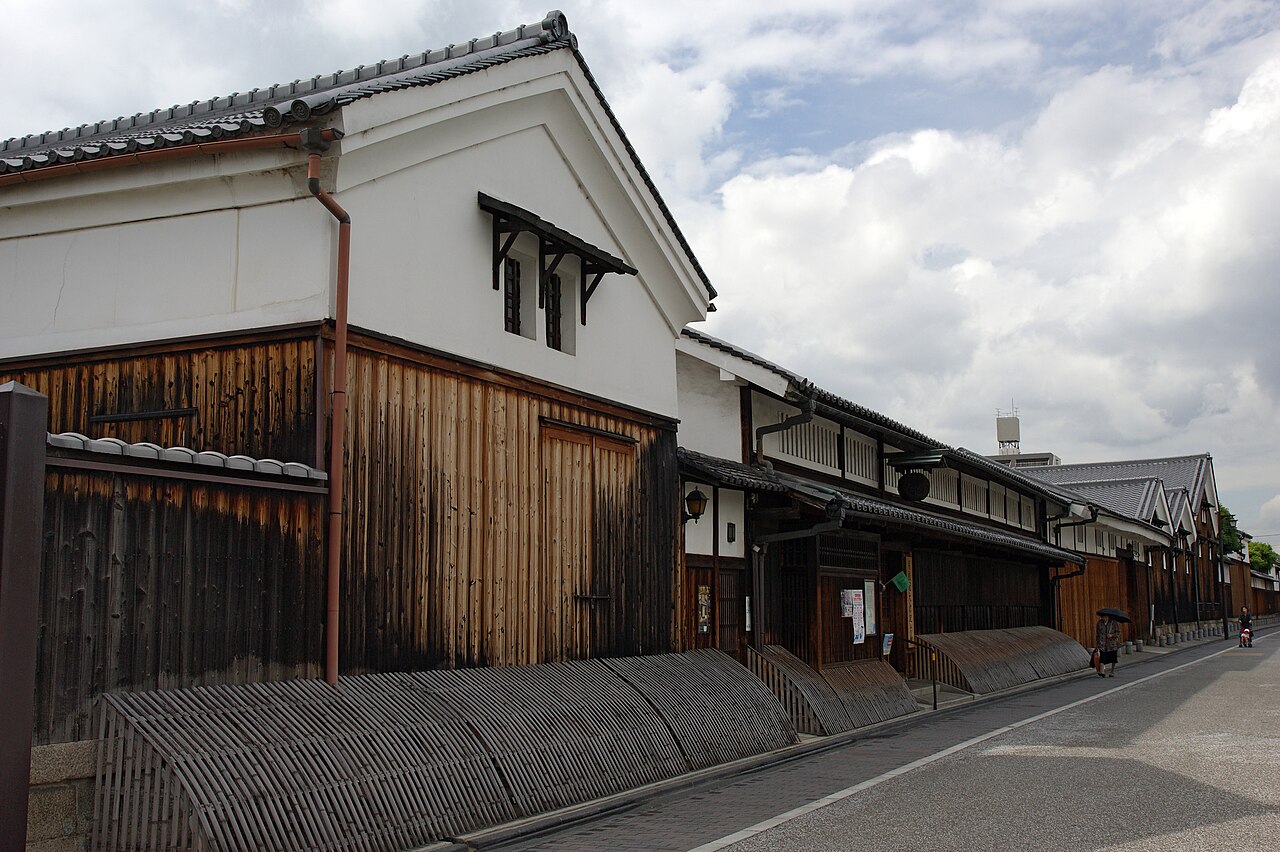
Fushimi is a town at the southern edge of the Kyoto Basin. In the Edo period (1603–1868), Fushimi prospered as the gateway of water transport on the Yodo River, which connected Kyoto and Osaka (大坂; today’s Osaka, 大阪). The Gekkeikan brewery did business along a road near the place where people got on and off the boats.
Fushimi was once also written as “伏水” (“underground water”). It is a place where water that has passed beneath the Momoyama Hills springs up at the foot of the hills. There is also a well inside the Gekkeikan Okura Sake Museum, and the brewery uses its water for brewing at the sake brewery next door.
The number of sake breweries in Fushimi fell sharply during the Edo period. There were 83 sake shops in Fushimi in 1657, but only 28 in 1785. The causes were fires, sake spoiling, and restrictions on sake making due to famines. In the Battle of Toba-Fushimi in 1868, many sake breweries burned down, but the Gekkeikan brewery escaped destruction even as the fire came close. The Okura family’s main house, built in 1828, still stands at the place where the business was founded.
From a local sake shop to a nationwide brand
For about 250 years after its founding, the Gekkeikan brewery was a small sake shop serving local people and travelers in Fushimi.
Things changed in the Meiji period (1868–1912). In 1886, Okura Tsunekichi (大倉恒吉), the eleventh generation, took over the family business at the age of 13. In 1905, Tsunekichi registered “Gekkeikan” as a trademark for the product name. Gekkeikan means a laurel wreath: a crown woven from laurel leaves that is given to the winner of a competition. In 1909, he set up a research laboratory for sake making and brought to market bottled sake that did not use preservatives. At the time, sake was mainly sold in barrels. It was also during this era that the brewery used the railways to expand its sales to Tokyo and other areas.
In 1989, the company established Gekkeikan Sake (USA), Inc. in Folsom, California, in the United States. This company makes and sells alcoholic beverages including seishu (清酒, sake). Under Japan’s rules, only seishu made in Japan using only Japanese rice can be labeled “Nihonshu” (日本酒, Japanese sake) (Sake glossary).
Gekkeikan sake
There are many products with the name “Gekkeikan”, even counting sake alone. The ingredients and how much the rice is polished differ from product to product, so please check the label on the bottle for the type. Here we introduce two of them.
Josen (上撰) is Gekkeikan’s standard product. It is a “futsu-shu” (普通酒), a sake that does not meet the conditions for a special designation (tokutei meisho), and its ingredients are rice, rice koji and brewer’s alcohol. Its aroma and taste are “a natural aroma and a mellow umami” (「自然な香りと、まろやかなうまみ」; from Gekkeikan’s product information). The label design carries on one from around the Taisho period. “Yondan-jikomi” (four-stage mashing), in which rice is added once more to the moromi (fermenting mash) near the end of fermentation, is a technique handed down in Fushimi. The recommended ways to drink it are chilled to 5–10°C, or warmed to 40–50°C as kan (warming sake).
Horin (鳳麟) Junmai Daiginjo is a “junmai daiginjo”: sake made only from rice, rice koji and water, with more than half of the outer part of the rice polished away. Its aroma and taste are “a sweet, lustrous aroma like muscat grapes, a refined sweetness, and a fresh, rich lingering finish that spreads through the mouth” (「マスカットのような甘く艶やかな香りと上品な甘み、口の中に広がるみずみずしく芳醇な余韻」; from Gekkeikan’s product information).
Visiting the brewery
What travelers can visit at the Gekkeikan brewery is its museum, the Gekkeikan Okura Sake Museum. At the Uchigura Brewery (内蔵酒造場), which is next door across a courtyard, a toji (master brewer) of the Tajima (但馬) school makes sake with traditional tools, but it is a production site and is not open to the public. The brewing work is shown in photos and videos on the official website.
The museum uses a sake brewery building built in 1909. The exhibits are historical materials about the company’s history, and sake-making tools such as wooden vats and sake barrels, which are designated Tangible Folk Cultural Properties of Kyoto City. At the end of the visit, you can drink sake at the tasting corner, “Kikizake-dokoro”.
| Item | Details (checked on September 30, 2026) |
|---|---|
| Opening hours | 9:30–16:30 (admission until 16:00) |
| Closed | August 13–16, December 28–January 4, and other temporary closing days |
| Admission | 600 yen for ages 20 and over, 100 yen for ages 13–19, free for ages 12 and under |
| Included | A souvenir for ages 13 and over. For ages 20 and over, a tasting of three sake chosen from about 10 prepared for each season |
| Duration | About 40–60 minutes. No guide is included |
| Payment | Cashless payment only (cash cannot be used from July 1, 2026) |
| Booking | If you book online in advance, you get priority admission. Bookings open at 9:30 two weeks before the visit date and close at 16:30 the day before |
| Without a booking | You can enter. You may have to wait when it is crowded, and you may not be able to visit once it reaches capacity |
| Group size | Up to 12 people per group. Visits by groups of 13 or more are currently suspended |
| English | There is an English information page. The booking page is in Japanese only |
| Phone | 075-623-2056 (9:30–16:30 on opening days) |
People who drove a car, motorcycle or bicycle there, people under 20, and people who are pregnant or breastfeeding cannot take part in the tasting. Inside the museum, there is a “museum guide” that you read on your own smartphone, and it works with the free Wi-Fi.
Getting there
Address: 〒612-8660 京都府京都市伏見区南浜町247
If you are coming from JR Kyoto Station, take the Kintetsu Kyoto Line from Kintetsu Kyoto Station and get off at Momoyama-goryomae Station. It is about a 10-minute walk from the station to the museum. From Chushojima Station on the Keihan Main Line, it is about a 5-minute walk. Please check whether your train stops at Momoyama-goryomae Station, and the times for your return, on Kintetsu’s station information and timetable.
Sights around the museum include Teradaya (寺田屋), the inn where Sakamoto Ryoma stayed; Gokonomiya Shrine (御香宮神社), the guardian shrine of Fushimi; and the Jukkokubune (十石舟), sightseeing boats that run on the Horikawa canal from spring to autumn.
Opening days and tour arrangements may change. Please check the brewery’s official information before visiting.
Where to buy Gekkeikan’s sake
The museum’s brand shop: This is the shop inside the Gekkeikan Okura Sake Museum. Besides Gekkeikan sake, including products sold only at the museum, it sells Kyoto crafts, narazuke (vegetables pickled in sake lees) and sake manju (steamed buns). If you only use the shop, there is no admission fee. Payment is cashless only (checked on September 30, 2026).
Official online store: There is the “Gekkeikan Online Shop“. Delivery is limited to addresses in Japan (checked on September 30, 2026).
If you are taking sake home abroad: Bottles over 100 ml cannot go in your carry-on bag before security screening. Put them in your checked baggage, or buy them at a duty-free shop after security screening. Please check in advance what applies if you have a connecting flight, and the import limits of the country you are arriving in. → Travel tips
Brewery facts
| Item | Details |
|---|---|
| Company | 月桂冠株式会社 (Gekkeikan Sake Company, Limited) |
| Founded | 1637 (the 14th year of the Kan’ei era). The company was incorporated on May 15, 1927 |
| Representative | President and Representative Director Okura Haruhiko (大倉治彦) |
| Address | 〒612-8660 京都府京都市伏見区南浜町247 Open in Google Maps |
| Phone | 075-623-2001 (head office) / 075-623-2056 (Gekkeikan Okura Sake Museum) |
| Main brand | Gekkeikan (月桂冠) |
| Official website | https://www.gekkeikan.co.jp/ (English: https://www.gekkeikan.com/museum/ ) |
| Facility for visitors | Gekkeikan Okura Sake Museum (fee charged; priority for bookings; you can enter without a booking; no guide for general visits). The brewery itself is not open to the public |
| Brewery-owned shops | The brand shop at the Gekkeikan Okura Sake Museum / official online store (delivery within Japan only) |