Who will enjoy this brewery
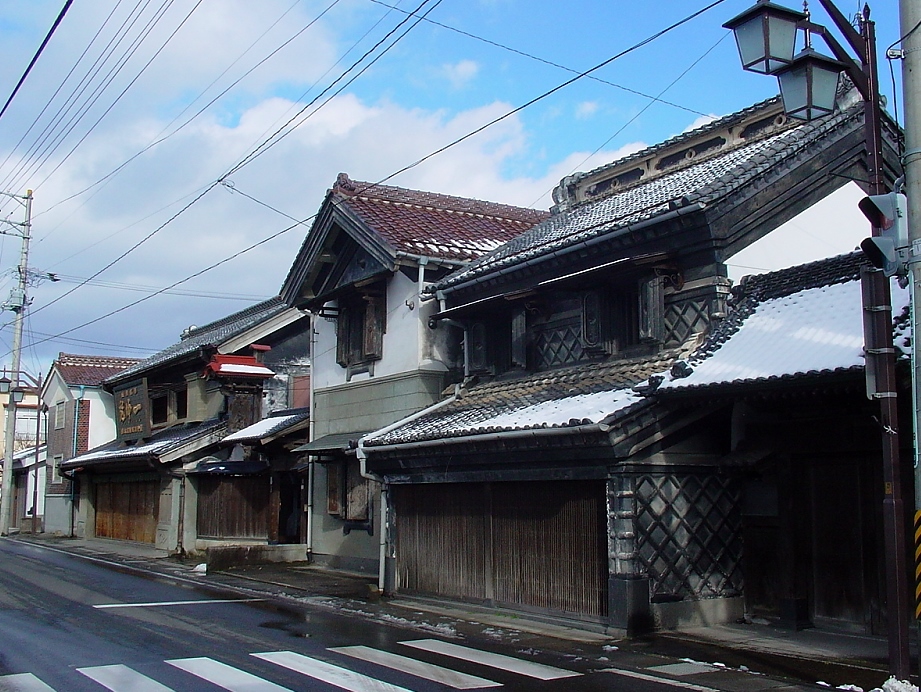
- People who want to walk through the streets of shops built in the dozo-zukuri style in Murata, about 30 minutes from Sendai by highway bus, and buy local sake at the brewery’s shop (as a rule, the brewery does not accept brewery tours)
- People who want to try sake made not from rice grown for sake making, but from “Sasanishiki”, a rice usually eaten as a meal
- People interested in sake made from old rice, such as “Aikoku”, a rice variety from the Meiji era
About Onuma Shuzoten
Onuma Shuzoten (大沼酒造店) is a brewery in Murata, 柴田郡, Miyagi Prefecture. It was founded in 1712, in the mid-Edo period. Its brand is “Kenkonichi (乾坤一)”.
As a rule, Onuma Shuzoten does not accept brewery tours (checked on October 25, 2026). The brewery’s shop sells sake.
A storehouse town that prospered on safflower
Murata is a town inland in the south of Miyagi Prefecture, bordering Sendai City to the south. In the Edo period, Murata prospered as a trading hub for safflower (benibana), and traded with the Kamigata region (Kyoto and Osaka) and with Edo. In the Meiji era it became a trading hub for silk cocoons, and after that it continued as a commercial town in the south of Miyagi Prefecture.
In the center of the town, shops in the “dozo-zukuri” style, covered with thick earthen walls, alternate along the streets with carved gates. Many of the walls use “namako-kabe”: flat tiles fixed to the wall, with the joints raised in white plaster. In 2014, this townscape was selected as one of the country’s Important Preservation Districts for Groups of Traditional Buildings (a system under which the country selects and protects historic townscapes). It was the first selection in Miyagi Prefecture.
In late March, the town holds “むらた町家の雛めぐり” (a tour of hina dolls displayed in Murata’s merchant houses), where hina dolls brought from Kamigata through the safflower trade are displayed in merchants’ storehouses and tatami rooms. In mid-October there are “蔵の町むらた布袋まつり”, a festival in which floats carrying Hotei (one of the Seven Lucky Gods) dolls over 2 meters tall parade through the town, and “みやぎ村田町蔵の陶器市”, a pottery fair where pottery is displayed and sold in the storehouse-style shop buildings of the townscape. Please check the dates on “MURATABI”, Murata’s tourism website.
A name made from two characters for heaven and earth
In the Edo period, Onuma Shuzoten sold its sake under the brand “Fuji Masamune (不二正宗)”. “Kenkon (乾坤)” is a word meaning heaven and earth, and the brewery writes about the origin of the name as follows (from the “About Onuma Shuzoten” page of Onuma Shuzoten’s official website):
“Moved by the taste of the sake he drank on an inspection visit, 松平正直, the first Governor of Miyagi Prefecture, named it ‘Kenkonichi’ in the hope that it would become the finest sake in the world.” (「視察で訪れた初代宮城県知事の松平正直が飲んだお酒の味わいに感動し、この世で一番のお酒になりますようにと『乾坤一』と名付けた。」)
Made from Sasanishiki, a rice for eating
Sake is often made with “sake rice”, rice grown as varieties suited to sake making. Aiming for sake making rooted in its locality, Onuma Shuzoten has mainly used “Sasanishiki” grown in Miyagi Prefecture. Sasanishiki is a rice variety normally eaten as cooked rice. Having kept using a rice for eating for a long time has become part of the brewery’s character.
While centering on Sasanishiki, the brewery also has farmers in Miyagi Prefecture grow, under contract, three varieties widely grown in the Meiji era: “Kamenoo (亀の尾)”, “Shinriki (神力)” and “Aikoku (愛国)”. Aikoku is a rice that a contract farmer in Murata itself increased little by little from seed rice, until there was enough to brew with.
The sake is made by a toji (the person responsible for sake making) who is a company employee and holds the Nanbu toji qualification, together with local employees and kurabito (people who work at the brewery) in their 20s to 40s.
Restarting after the earthquake
The earthquake of March 16, 2022 left Onuma Shuzoten unable to make sake. With support from many people, it resumed brewing in November of the same year, and from late December it was able to start shipping new-season sakes, such as “Tokubetsu Junmai Karakuchi”, little by little.
Kenkonichi sake
Here are three of the brewery’s products, each of a different type. Prices are those shown on the brewery’s official website (before tax, 720 ml. Checked on October 25, 2026).
- Kenkonichi Tokubetsu Junmai Karakuchi (乾坤一 特別純米辛口) — A “tokubetsu junmai-shu”: made only from rice, rice koji and water, with 40% or more of the outer part of the rice polished away. The rice is Sasanishiki. It is Kenkonichi’s standard sake, sold all year round. In the new-season period it has a fresh taste; after the summer it takes on a matured character, and it can be drunk at room temperature or as kan (warmed). 1,650 yen
- Kenkonichi Tokubetsu Junmai HEAVEN&EARTH (乾坤一 特別純米 HEAVEN&EARTH) — A product that is identical to Tokubetsu Junmai Karakuchi in its rice, how much the rice is polished, and its yeast. Even so, its taste is the opposite: it has an aroma and taste with acidity. The brewery recommends drinking it slightly chilled, from a glass. 1,900 yen
- Kenkonichi Junmai-shu Aikoku (乾坤一 純米酒 愛国) — A “junmai-shu”: made only from rice, rice koji and water. The rice is Aikoku from Miyagi Prefecture. It can be drunk chilled, at room temperature or warmed. A seasonal product from November to around April. 1,600 yen
“Karakuchi” does not mean salty; it means a sake in which you sense little sweetness (→ Amakuchi and karakuchi). The ingredients and brewing methods differ from product to product, so please check the type on the label. There are also seasonal products, such as “Junmai うすにごり” (lightly cloudy), released in December; “Junmai Ginjo Suzukaze (鈴風)”, released in May; and “Junmai Ginjo Genshu Hiyaoroshi”, released in early September.
Visiting the brewery
As a rule, no brewery tours
As a rule, Onuma Shuzoten does not accept brewery tours (checked on October 25, 2026). If you visit the brewery, go to its shop, which sells sake.
The brewery’s shop
| Onuma Shuzoten’s shop (checked on October 25, 2026) | |
|---|---|
| Address | 宮城県柴田郡村田町大字村田字町56-1 Open in Google Maps |
| Closed | Sundays and national holidays. From May to September, Saturdays, Sundays and national holidays |
| Opening hours | From 8:30. The closing time differs depending on the source, so please check by phone before visiting |
| Phone | 0224-83-2025 |
| Note | Some products, such as limited editions, are not sold at the shop |
| Tasting / English support | Not published |
Getting there
Address: 〒989-1305 宮城県柴田郡村田町大字村田字町56-1
- By bus: From Sendai Station (仙台駅前 stop), take the 仙台-村田・蔵王・遠刈田 highway bus run by 宮城交通 to 村田町役場前 (the stop in front of the town hall), about 30 minutes, 950 yen one way (timetable and fare revised in June 2024). The bus also stops at 村田町公民館前 (the stop in front of the community center). Please check the route from the bus stop to the brewery on a map. Please check the times for both the outward and return journeys (up to the last bus back) on 宮城交通’s timetable
- By car: If you go by car, use a town-run parking lot nearby
Opening days and tour arrangements may change. Please check the brewery’s official information before visiting.
Where to buy Onuma Shuzoten’s sake
To buy at the brewery, go to the brewery’s shop. The brewery’s official website has no information about an online shop.
The brewery does not publish a list of stockists on its official website (checked on October 25, 2026). If you are looking for its sake during your trip, please contact the brewery (phone 0224-83-2025, email info@kenkonichi.com), or ask at a liquor store that sells sake.
Before you buy
- Seasonal products and limited editions may be sold out.
- If you are taking sake home abroad: Bottles over 100 ml cannot go in your carry-on bag before security screening. Put them in your checked baggage, or buy them at a duty-free shop after security screening. Please check in advance what applies if you have a connecting flight, and the import limits of the country you are arriving in. → Travel tips
Other breweries in Miyagi Prefecture are gathered on our Miyagi Prefecture page.
Brewery facts
| Item | Details |
|---|---|
| Brewery | 有限会社大沼酒造店 (Onuma Shuzoten) |
| Founded | 1712 (the 2nd year of the Shotoku era). The company was incorporated in December 1967 |
| Address | 〒989-1305 宮城県柴田郡村田町大字村田字町56-1 Open in Google Maps |
| Phone | 0224-83-2025 (fax 0224-83-5689) |
| Main brand | Kenkonichi (乾坤一) |
| Rice | Mainly Sasanishiki from Miyagi Prefecture. Kamenoo, Shinriki and Aikoku are grown under contract in Miyagi Prefecture |
| Official website | https://kenkonichi.com/ |
| Brewery tours | As a rule, not accepted |
| Direct sales | The brewery’s shop (closed on Sundays and national holidays. From May to September, closed on Saturdays, Sundays and national holidays) |
| List of stockists | Not published (checked on October 25, 2026) |
| English support | There is no official page in English |