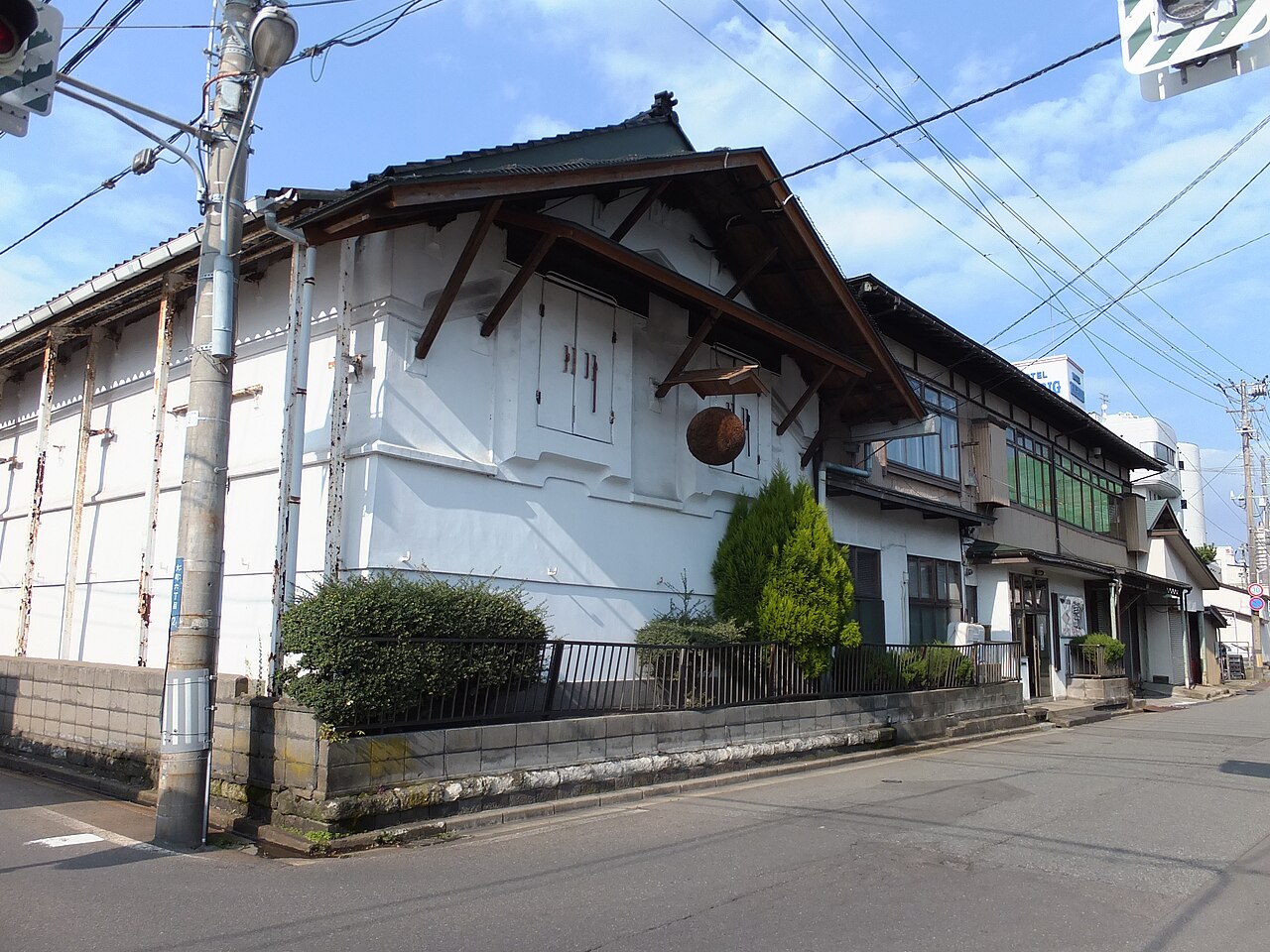
Who will enjoy this brewery
- People who want to look for sake made only from rice grown in Akita Prefecture at liquor stores and restaurants during their trip
- People who are interested in the traditional “kimoto” method, or in sake brewed in wooden vats
- People who can enjoy drinking and searching for sake as part of their trip, rather than visiting the brewery (Aramasa Shuzo has not published that it accepts visitors, and it does not sell sake directly at the brewery)
About Aramasa Shuzo
Aramasa Shuzo (新政酒造) is a brewery in Omachi (大町), Akita (秋田市), Akita Prefecture. It was founded in 1852. Its brand is “Aramasa (新政)”, the same name as the company, and within it there are series such as “No.6” and “Colors”.
Aramasa Shuzo’s sake is made according to the following rules.
- The only rice used is rice grown in Akita Prefecture
- All of its sake is made as junmai, with no brewer’s alcohol added
- The shubo (yeast starter: yeast grown in large quantities to start fermentation) is made only with the traditional “kimoto” method
- When cultured yeast is used, it uses only the yeast called “Kyokai No. 6”
Brewery tours are not published as available. The brewery does not sell sake directly (checked on September 30, 2026).
The brewery where No. 6 yeast was found
Aramasa Shuzo was started by the first generation, Sato Uhee (佐藤卯兵衛). The brand name “Aramasa” was taken from the phrase “新政厚徳” (shinsei kotoku), which the Meiji government held up.
In the Taisho era, the fourth generation, 佐藤佐吉, sent his son 卯三郎 to the Osaka Higher Technical School (today’s Faculty of Engineering, Osaka University) to study brewing. When 卯三郎 returned to the brewery, he took charge of sake making himself, and he later became the fifth-generation 佐藤卯兵衛.
In 1930, an excellent yeast (koubo: a microorganism that turns sugar into alcohol) was collected from this brewery’s moromi (fermenting mash: sake still fermenting, before pressing). This is “Kyokai No. 6”. The name “Kyokai” comes from the Brewing Society of Japan (日本醸造協会), which cultures and sells yeast. Aramasa Shuzo still uses only this No. 6 as its cultured yeast.
After the Second World War, the brewery suffered a major fire and was once pushed to the edge of closing. Since then, sake making has continued at the place where the brewery was founded.
From the 2008 brewing season, the brewery moved to a system in which its own employees make the sake. Within a few years, it limited its yeast to the No. 6 line only, its rice to rice from Akita Prefecture only, and switched all of its products to junmai. From the 2015 brewing season, all of its shubo has been made with kimoto.
Kimoto, wooden vats and the rice fields of Akita
Kimoto (生酛) is a method in which lactic acid bacteria are grown in the shubo, and their lactic acid protects it from unwanted microbes. It involves a task called “yama-oroshi” (山卸し), in which the ingredients are ground down. Aramasa Shuzo does not add cultured lactic acid bacteria either; it starts its shubo with the lactic acid bacteria that enter the mash naturally.
Aramasa Shuzo also does not use additives that the Liquor Tax Act does not require to be shown on the label: acids that add sourness, enzyme agents that replace koji, and inorganic salts and vitamins that help fermentation.
The brewery uses many kioke (wooden brewing vats) for its brewing. All of the “Colors” series is brewed in wooden vats.
The brewery grows part of its rice itself. In the rice fields of the Uyashinai (鵜養) district of Kawabe (河辺), Akita, it is working on growing rice without pesticides.
The labels also have a feature of their own. Junmai sake can be labeled “junmai ginjo”, “junmai daiginjo” and so on, mainly depending on how much of the rice has been polished away. However, no matter how much the rice has been polished, Aramasa Shuzo labels all of its sake with the same special designation (tokutei meisho: the names of sake types set by national standards): “junmai-shu”, sake made only from rice, rice koji and water. This comes from the idea that the value of a sake is not decided by the rice polishing ratio (seimai buai: the share of the rice that remains after polishing) alone.
“No.6” and “Colors”
- No.6 — Aramasa Shuzo’s standard namazake (unpasteurized sake: sake that has never been pasteurized, i.e. heated to kill microbes). The series aims to convey the character of No. 6 yeast. Because namazake changes in taste easily, it is usually shipped only in the cold months from winter to spring. No.6 is shipped all year round by storing it at the brewery at minus 5 degrees Celsius or below and selling it only at specialist liquor stores chosen by the brewery. The rice variety is not fixed; rice from Akita Prefecture is used
- Colors — A pasteurized series. Each product uses one kind of sake rice (rice suited to making sake), and the aim is to convey the character of that rice
Both series include several products, and the ingredients and brewing methods differ from product to product. Please check the label for the type.
Aramasa Shuzo sells most of its products in 720 ml bottles. This comes from its view on quality control: sake needs to be stored so that it does not touch the air, and namazake in particular is best finished soon after opening.
Visiting the brewery
Aramasa Shuzo has not published that it accepts brewery tours. The brewery does not sell sake directly (checked on September 30, 2026).
If you want to visit a sake brewery in Akita Prefecture, the list of brewery tours of the Akita Prefecture Tourism Federation is a useful reference. It lists breweries in Akita Prefecture that offer tours or “brewery open house” (蔵開放) days (checked on September 30, 2026). Some breweries require booking, and some have limited tour dates and times, so please check with each brewery.
Opening days and tour arrangements may change. Please check the brewery’s official information before visiting.
Where to buy Aramasa Shuzo’s sake
Aramasa Shuzo does not publish a list of stockists or authorized retailers (tokuyakuten) (checked on September 30, 2026). The brewery does not have an official online store either.
If you contact the brewery by phone, it can introduce you to an authorized liquor store near you (a liquor store that deals directly with the brewery). The phone number is 018-823-6407.
Before you buy
- No.6 is a namazake. The brewery recommends always keeping it in the refrigerator, both before and after opening, and finishing it within 3 months of the month it was shipped. Please avoid carrying it around at room temperature for a long time during your trip.
- For other products too, if the label shows a storage temperature, please follow it.
- Whether a store carries the sake, and its stock, differ from store to store. Please check with the store before visiting.
- If you are taking sake home abroad: Bottles over 100 ml cannot go in your carry-on bag before security screening. Put them in your checked baggage, or buy them at a duty-free shop after security screening. Please check in advance what applies if you have a connecting flight, and the import limits of the country you are arriving in. → Travel tips
Brewery facts
| Item | Details |
|---|---|
| Brewery | 新政酒造株式会社 (Aramasa Co., Ltd.) |
| Founded | 1852 (the 5th year of the Kaei era) |
| Representative | Chairman and Representative Director Sato Uhee (佐藤卯兵衛) / President and Representative Director 佐藤祐輔 |
| Address | 〒010-0921 秋田県秋田市大町6丁目2番35号 Open in Google Maps |
| Phone | 018-823-6407 (fax 018-864-4407) |
| Main brand | Aramasa (新政) |
| Official website | http://www.aramasa.jp/ |
| Brewery tours | Not published |
| Sales at the brewery | None |
| List of stockists | Not published. Authorized liquor stores are introduced by phone (checked on September 30, 2026) |
| English support | Not published |