京都府
Kyoto
Sake in Kyoto
Kyoto Prefecture lies roughly in the middle of the Japanese archipelago and is long and narrow from north to south. The Kyoto Federation of Sake Brewers Associations has 40 members (as of May 2026). In October 2025, “Kyoto” was designated under the geographical indication (GI) system, which protects the names of sake-producing regions. Its condition is a round, soft feel in the mouth and “a sake that does not get in the way of food, with each bringing out the best in the other.”
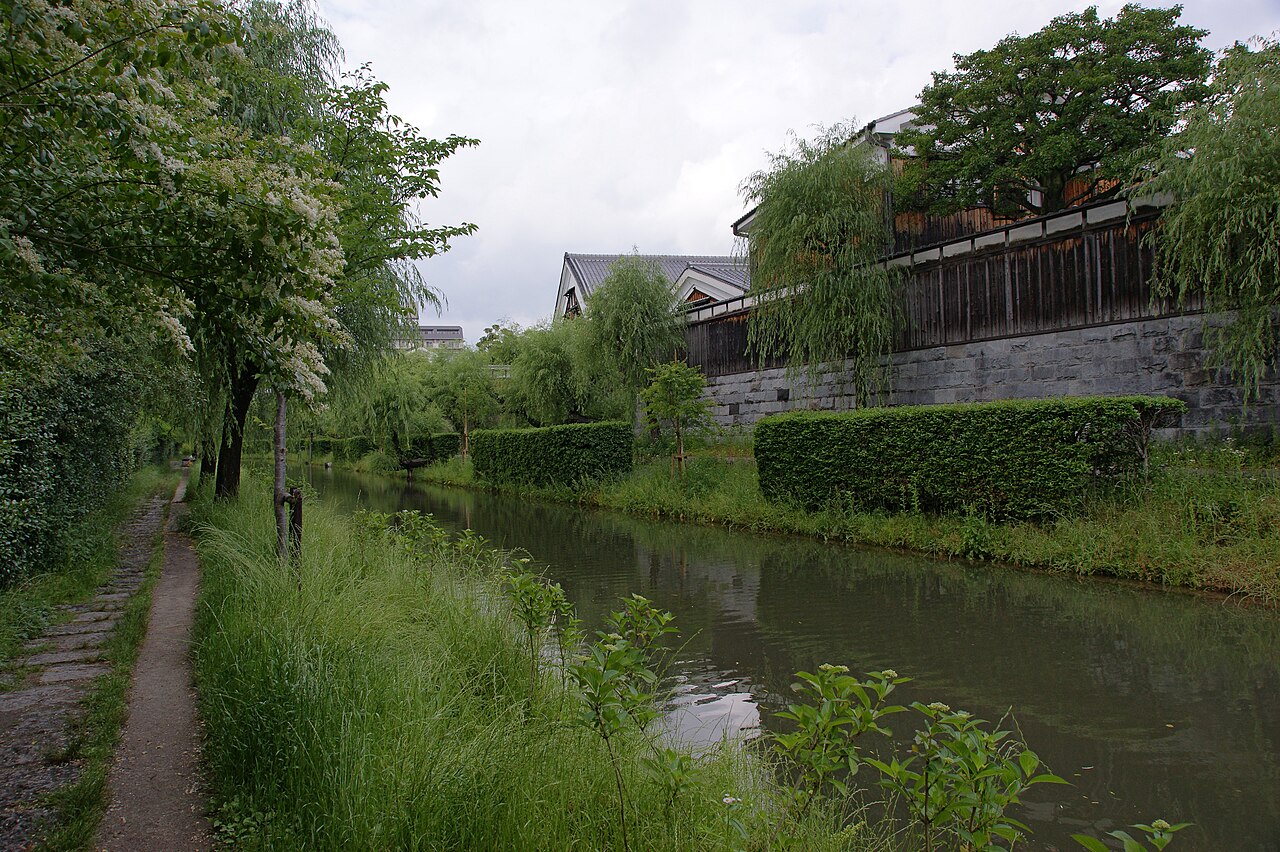
Water and the winter cold are what support this taste. The prefecture has two river systems, the Yura River, which flows into the Sea of Japan, and the Yodo River, which flows toward the Pacific side, and water that passes through granite layers ranges from soft to moderately hard. In winter the north gets heavy snow, while the Kyoto Basin in the south sees a harsh cold known as “sokobie” (a deep, penetrating cold), which lets the moromi (the fermenting mash that becomes sake) ferment gently. Fushimi, in the south, is so rich in groundwater that its name was once also written 伏水, with characters meaning “underground water.”
Rice and people support it too. Iwai, a rice variety suited to sake brewing (shuzo kotekimai), was born in 1933 at the prefecture's agricultural experiment station. Its cultivation once died out, but it was revived through the efforts of the Fushimi Sake Brewers Association, and in 1992 sake made from Iwai was released as a product for the first time in about 20 years. In 2013, Kyoto City became the first city in Japan to put into force an ordinance promoting toasts with sake. Sake-producing areas are spread across the prefecture, from Kyotango and Miyazu in the north through Fukuchiyama, Kyoto Tamba, Rakuchu (central Kyoto) and Fushimi to Yamashiro in the south.
Brewery map
Close-up (Kyoto)
Breweries by municipality (dot size shows the number of breweries)Featured breweries
- Kinoshita Shuzo 木下酒造Kyotango
- Gekkeikan 月桂冠Kyoto
- Kizakura 黄桜Kyoto
- Kinshi Masamune キンシ正宗Kyoto
The 47 breweries on our list are grouped by the municipality where they are located. Each dot marks a representative point of the municipality, not the brewery itself (featured breweries are shown at their actual locations). Locations are based on the address search of the Geospatial Information Authority of Japan.
Featured breweries
- Gekkeikan 月桂冠Gekkeikan 月桂冠KyotoRead the article
- Kizakura 黄桜Kizakura 黄桜Kyoto
- Kinshi Masamune キンシ正宗Kinshi Masamune キンシ正宗Kyoto
- Kinoshita Shuzo 木下酒造Tamagawa 玉川Kyotango