Who will enjoy this brewery
- People who want to visit a sake brewery museum they can reach by train from Kobe or Osaka
- People who want to drink sake with no lingering sweetness together with a meal
- People who are interested in old sake-making tools and the history of labor-intensive brewing methods
- People who want to try “taruzake” (樽酒), sake given its aroma in cedar barrels
About Kiku-Masamune Sake Brewing
Kiku-Masamune Sake Brewing (菊正宗酒造; brand: “Kiku-Masamune (菊正宗)”) is a sake brewery in Higashinada Ward (東灘区), Kobe, Hyogo Prefecture. It began in the 2nd year of the Manji era (1659). Kano Jirodayu Munenori (嘉納治郎太夫宗徳), who was a timber merchant, built a sake brewery on the grounds of his home in Mikage (御影), Kobe.
At the end of the 18th century, the sake of Nada (灘) was sent to Edo (today’s Tokyo) and became popular. Nada Gogo (灘五郷, the five districts of Nada) is made up of five areas: Nishigo, Mikagego, Uozakigo, Nishinomiyago and Imazugo. Kiku-Masamune is a brewery in Mikagego.
In the air raids of 1945, most of the brewery burned down. In the Great Hanshin-Awaji Earthquake of 1995, the sake brewery museum collapsed, and it was rebuilt in 1999.
“Karakuchi” that leaves no sweetness
Kiku-Masamune calls its sake “honryu karakuchi” (本流辛口, mainstream dry). The “karakuchi” (dry) of sake does not mean heat like chili peppers or saltiness; it means that there is little sweetness.
What Kiku-Masamune has aimed for is a dry sake that you can keep drinking together with dishes such as soba, sashimi and sushi.
Kimoto brewing, water and rice
Labor-intensive “kimoto”
Sake is fermented from a “shubo” (酒母, yeast starter), in which a large amount of yeast has been grown. What Kiku-Masamune continues is “kimoto” (生酛), the old way of making this shubo.
Kimoto is a method of making the shubo by hand from water, rice and rice koji, taking about four weeks. Many breweries use “sokujo-moto” (速醸酛), which adds commercially made lactic acid and takes a little over two weeks. In 1958, Kiku-Masamune built the “Kaho-gura (嘉宝蔵)”, a brewery that operates only in the cold winter months, and has continued this brewing method there. At the Kaho-gura, as part of the process of making the moto (the starter), the kurabito (brewery workers) perform “moto-fumi” (酛ふみ), getting into tubs and treading the ingredients with their feet.
Kimoto is a method the brewery had continued for its higher-grade limited sake, but it has also switched its standard “Josen Honjozo (上撰 本醸造)” to kimoto brewing. Honjozo is sake with 30% or more of the outer part of the rice polished away and a small amount of brewer’s alcohol added.
The water of Nishinomiya and the rice fields of Miki
Kiku-Masamune uses “Miyamizu (宮水)” for making its sake. Miyamizu is groundwater that springs up in a very limited area of Nishinomiya (西宮), and Kiku-Masamune manages wells in that area.
For rice, in the 24th year of the Meiji era (1891), the brewery began contract growing of sake rice with farmers in the Yokawa and Kuchiyokawa areas of Miki (三木市), Hyogo Prefecture. This group of farmers is called the “Kano-kai (嘉納会)”, and it still delivers rice today.
Visiting the brewery
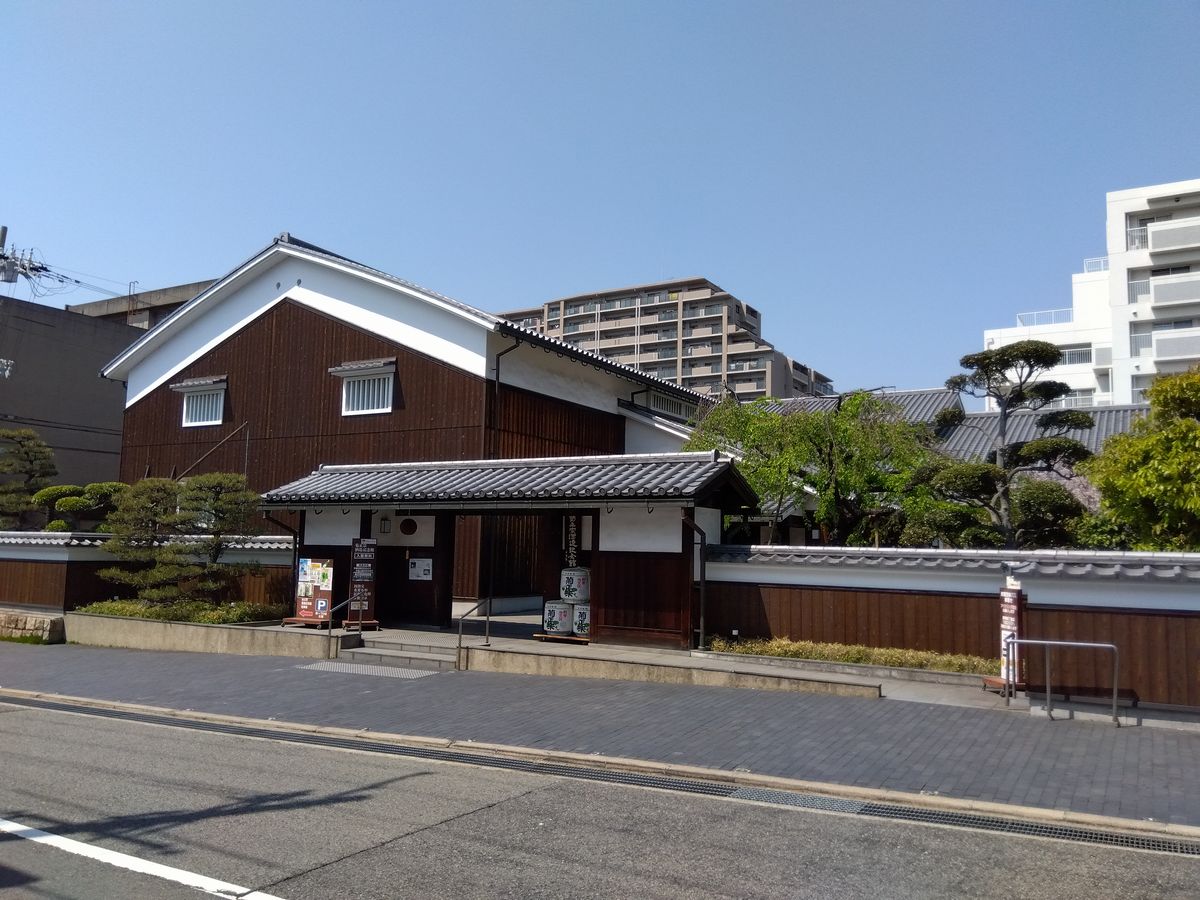
You can visit the Kiku-Masamune Sake Brewery Museum (菊正宗酒造記念館) for free without a booking (for groups of fewer than 10). It is not the brewery where sake is brewed, but a museum that displays sake-making tools. The following was checked on September 30, 2026.
| Opening hours | 9:30–16:30 (admission until 16:00) |
| Closed | Tuesdays (open if Tuesday is a public holiday, and closed the following Wednesday instead), and the New Year holidays (December 30, 2026 to January 4, 2027). Tuesdays became closing days from April 2026 |
| Admission | Free |
| Booking | Not needed for fewer than 10 people. Groups of 10 or more book through the booking website; groups of 40 or more call the museum |
| Phone | 078-854-1029 |
What you can see. Almost all of the sake-making tools in the exhibition room are designated Important Tangible Folk Cultural Properties of Japan.
Tasting. At the “sake tasting corner” in the museum, you can taste “nama genshu” (生原酒), sake that has not been pasteurized (heat-treated) and has had no water added, as well as seasonal sake. If you plan to taste, please do not come driving a car or motorcycle.
Tours by booking (free). There are two facilities that the museum guides visitors to. Both take up to 15 people per tour, and groups are not accepted.
- Taruzake Meister Factory (樽酒マイスターファクトリー): A workshop that makes the barrels used for the brewery’s taruzake. 10:30 / 13:30 / 14:30, about 30 minutes. You must book at least two days before the visit date. On Saturdays, Sundays and public holidays there is no barrel-making work, and the work is introduced by video instead. Elementary school students and younger children cannot enter
- Sakazuki Exhibition Hall (盃展示館; sakazuki are small cups for drinking sake): A 2-minute walk from the museum. 11:10 / 14:10 / 15:10, about 30 minutes
English. The museum’s official website has pages in English, Chinese (Simplified and Traditional) and Korean. However, the tours of the Taruzake Meister Factory and the Sakazuki Exhibition Hall are in Japanese only.
Getting there
The address is 神戸市東灘区魚崎西町1-9-1.
- JR: At Sumiyoshi Station, change to the Rokko Liner, and from Minami-Uozaki Station, the second stop, walk 2 minutes northwest
- Hanshin Railway: From Uozaki Station, a 10-minute walk south along the promenade by the Sumiyoshi River
- Approximate riding times (not including transfers, as of September 2026): JR Osaka Station to Sumiyoshi Station about 30 minutes, JR Sannomiya Station to Sumiyoshi Station about 8 minutes, Hanshin Umeda Station to Uozaki Station about 35 minutes, Hanshin Sannomiya Station to Uozaki Station about 10 minutes
Please check times and fares on the official websites of JR West, Hanshin Railway and the Rokko Liner (Kobe New Transit). In the same Higashinada Ward, there are other breweries with facilities for visitors, such as Hakutsuru Sake Brewing.
Opening days and tour arrangements may change. Please check the brewery’s official information before visiting.
Where to buy Kiku-Masamune Sake Brewing’s sake
The museum shop. The museum sells limited sake and original goods. The products available only at the museum include “Kiku-Masamune Hoken Junmai Ginjo (菊正宗 奉献 純米吟醸)”, a sake made only from rice, rice koji and water, with 40% or more of the outer part of the rice polished away and fermented slowly at a low temperature (checked on September 30, 2026). The selection may change.
Official online stores. There is the “Kiku-Masamune Net Shop” and an official store on Rakuten Ichiba.
- If you are taking sake home abroad: Bottles over 100 ml cannot go in your carry-on bag before security screening. Put them in your checked baggage, or buy them at a duty-free shop after security screening. Please check in advance what applies if you have a connecting flight, and the import limits of the country you are arriving in. → Travel tips
Brewery facts
| Item | Details |
|---|---|
| Company | 菊正宗酒造株式会社 (Kiku-Masamune Sake Brewing Co., Ltd.) |
| Founded | The 2nd year of the Manji era (1659) |
| Representative | President and Representative Director Kano Jiroemon (嘉納治郎右衞門) |
| Address | Head office: 〒658-0046 兵庫県神戸市東灘区御影本町1-7-15 Open in Google Maps |
| Phone | 078-851-0001 (head office) |
| Main brands | Kiku-Masamune (菊正宗), Hyakumoku (百黙) |
| Official website | https://www.kikumasamune.co.jp/ (English: https://www.kikumasamune.com/ ) |
| Facility for visitors | Yes (Kiku-Masamune Sake Brewery Museum; free admission; no booking needed for fewer than 10 people) |
| Brewery-owned shops | The museum shop, and the official online store (Kiku-Masamune Net Shop) |