岩手県
Iwate
Sake in Iwate
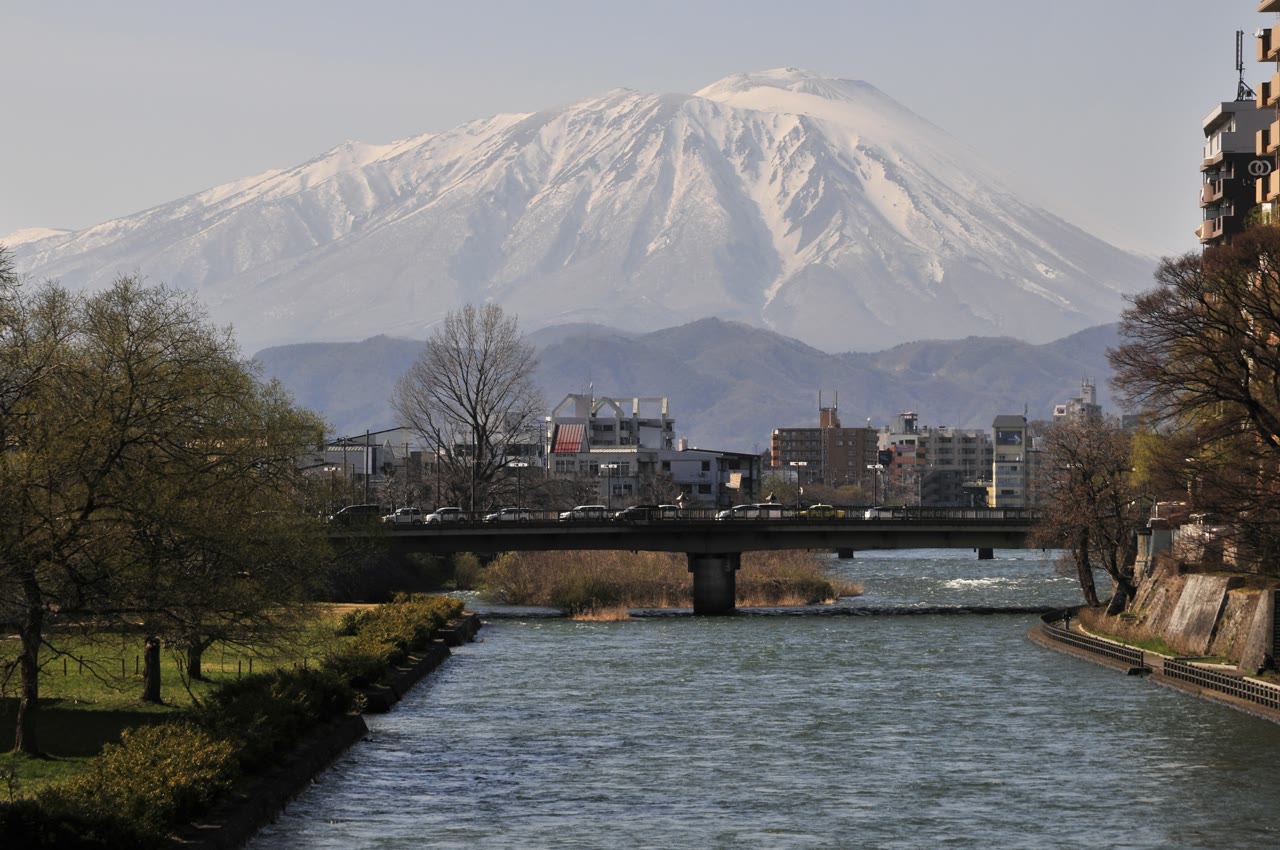
Iwate Prefecture lies in the northeast of Honshu and faces the Pacific Ocean to the east. The Iwate Sake Brewers Association has 21 member companies (as of August 2026). In September 2023, “Iwate” was designated under the geographical indication (GI) system, which protects the names of sake-producing regions. Its conditions are a soft feel in the mouth and a rich umami that comes from the rice. It has a fresh aroma like green bamboo or new leaves, and junmai ginjo and ginjo (sake made by polishing away the outer 40% or more of the rice grain and fermenting it slowly at low temperatures) also add fruity aromas like green apple and pear.
Water and the winter cold are what support this taste. Snow and rain that fall on the Ou Mountains to the west and the Kitakami Highlands to the east become the Kitakami River, bringing underground water and groundwater to every part of the prefecture. This water is rich in calcium and magnesium, which help yeast (the microorganism that carries out fermentation) multiply. In winter, temperatures in parts of the inland and mountain areas drop to minus 20°C or below, creating an environment suited to ginjo brewing, which ferments sake for a long time at low temperatures.
The sake is made by the “Nanbu toji,” the largest group of toji (master brewers) in Japan. In 1678, the merchant Gonbe Murai invited craftsmen from the Kamigata region (Kyoto and Osaka) to Shiwa (now Shiwa Town) and began brewing sake there, and the techniques were passed down to local farmers. The prefecture's Agricultural Research Center and Industrial Technology Institute have developed shuzo kotekimai (rice varieties suited to sake brewing) such as “Gin Ginga,” “Gin Otome” and “Yui no Ka,” as well as yeasts unique to the prefecture such as “Giovanni no Shirabe.”
Brewery map
Breweries by municipality (dot size shows the number of breweries)Featured breweries
- Akabu Shuzo 赤武酒造Morioka
- Nanbu Bijin 南部美人Ninohe
The 22 breweries on our list are grouped by the municipality where they are located. Each dot marks a representative point of the municipality, not the brewery itself (featured breweries are shown at their actual locations). Locations are based on the address search of the Geospatial Information Authority of Japan.
Featured breweries
- Akabu Shuzo 赤武酒造Akabu 赤武MoriokaRead the article
- Nanbu Bijin 南部美人Nanbu Bijin 南部美人Ninohe