和歌山県
Wakayama
Sake in Wakayama
Wakayama Prefecture lies on the west side of the Kii Peninsula, and about 80% of its area is mountainous. To the west it faces the sea that runs from the Seto Inland Sea to the Pacific Ocean, and to the east the Kii Mountains stretch from north to south. In the one year from July 2024 to June 2025, sake was made at 8 places in the prefecture.
Wakayama Prefecture was known in old times as “木の国” (the land of trees), and its layers of mountain ridges and forests provide abundant, high-quality water. Much of the water used for brewing sake is relatively soft, producing mellow sake that is pleasant in the mouth and that you do not tire of drinking. In some areas, spring water of moderate hardness is used, and sake with fruity aromas, or with the umami of rice and a clean finish, is also made. The prefecture has created a “Sake Mapping Chart” that classifies representative products from the prefecture among sake made only from rice, rice koji and water (junmai daiginjo, junmai ginjo and junmai-shu) along axes from dry to sweet and from rich to light, and introduces the features of each.
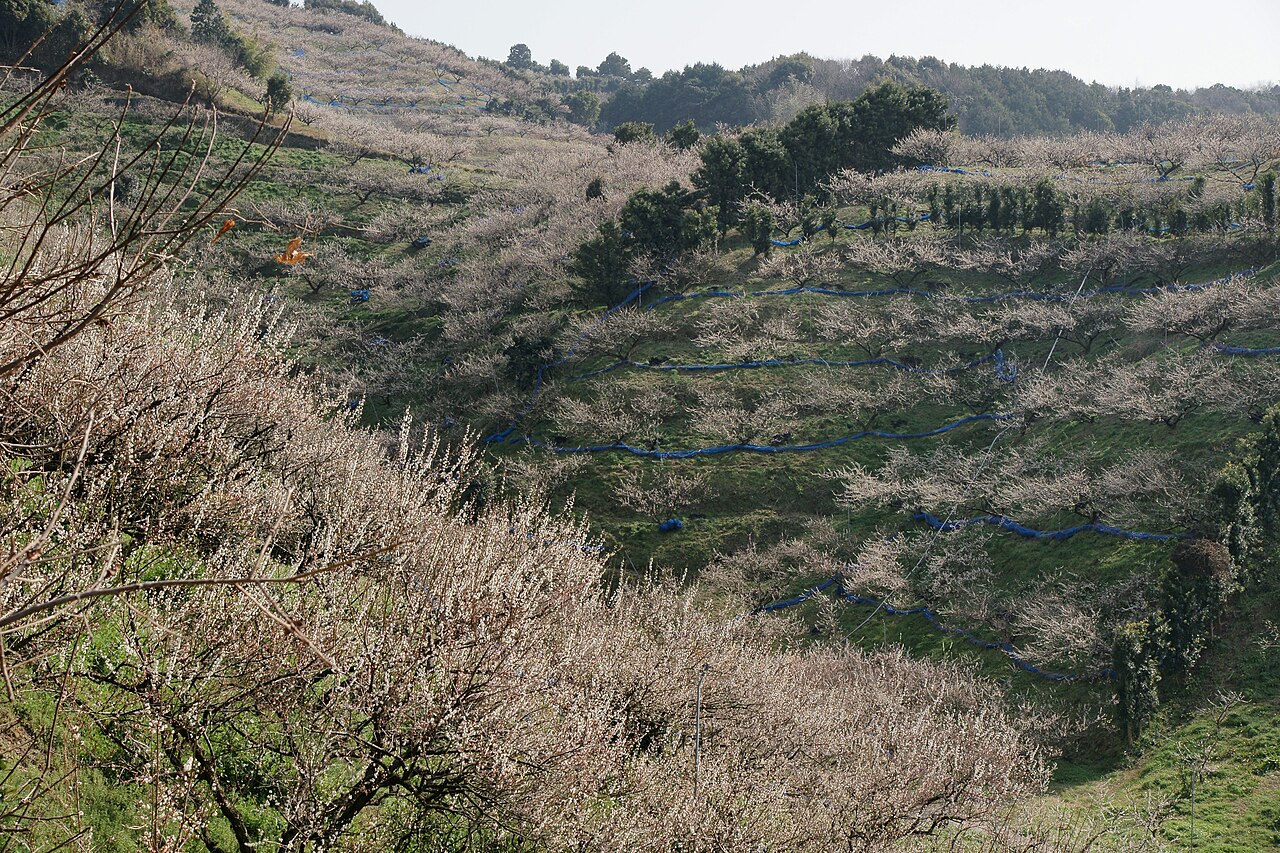
Fermented foods such as 金山寺味噌 (a kind of miso) and 湯浅醤油 (soy sauce) have long been made in Wakayama, and there are many makers of sake and other alcoholic drinks. Sake breweries are busy from winter to spring after the rice harvest, and there is less work from spring to summer. So making umeshu (plum liqueur) with the prefecture's ume plums, which can be harvested around June in that season, became popular. In September 2020, umeshu made by steeping ume plums harvested in Wakayama Prefecture within the prefecture was designated as “Wakayama Umeshu” under the geographical indication (GI) system, which protects the names of production regions of alcoholic drinks. Sake, shochu and other alcoholic drinks are used for steeping the plums, and the steeping period is set at 90 days or more. In 2015, “みなべ・田辺の梅システム,” the local system of growing ume plums, was recognized as a Globally Important Agricultural Heritage System.
Brewery map
Breweries by municipality (dot size shows the number of breweries)Featured breweries
- Heiwa Shuzo 平和酒造Kainan
The 19 breweries on our list are grouped by the municipality where they are located. Each dot marks a representative point of the municipality, not the brewery itself (featured breweries are shown at their actual locations). Locations are based on the address search of the Geospatial Information Authority of Japan.
Featured breweries
- Heiwa Shuzo 平和酒造Kiddo 紀土KainanRead the article